43. Carolina Caycedo and David de Rozas — Fences, Dams, and the Blessings of the Mystery

Listen to Chrysalis on Apple Podcasts, Spotify, YouTube, and Captivate.
Texans like to say that “everything’s bigger in Texas.” You might also say that everything’s more privatized in Texas. Among Western states, Texas has more private and state-owned land and less federal public land than any of the others. Less than 2 percent of land in Texas is federally owned public land. In Nevada, by contrast, over 80 percent of the land is public and federally owned.
The Republic of Texas was an independent nation when it entered the Union in 1845, unlike other Western states that were carved out of lands acquired by the United States through treaties with other nations. To pay its debts and build infrastructure after entering the Union, the new state of Texas sold off its lands to ranchers, farmers, railroads, and developers.
In other Western states, the U.S. government negotiated treaties with hundreds of indigenous tribes, often with aggressive coercion tactics and threats of violence. The U.S. government rarely honored these treaties in full, but tribes often maintained some portion of their ancestral lands. In Texas, again, things were different.
In the absence of significant federal land, the U.S. government had limited options for negotiating treaties with indigenous tribes without the cooperation of the Texas state government, but the state had little interest in treaties or reservations. Instead, Texas maintained a position that tribes had no legal right to any land there and pursued a philosophy of total expulsion and extermination to maximize and protect the new land holdings of white settlers.
The Texas Rangers enforced this position with notorious brutality and violence—burning villages; destroying winter food supplies; slaughtering horses and bison; and executing men, women, and children alike. At times, the U.S. Cavalry escorted native peoples out of Texas to reservations in Oklahoma; but when conflicts arose, the U.S. troops often rode alongside the Texas Rangers to subdue or kill indigenous people.
When the artists and filmmakers Carolina Caycedo and David de Rozas first visited Texas several years back, they were struck immediately by all of the fences. Along the roads, between pastures, around farms, there are fences to hold animals in, keep people out, and clearly demarcate private property. Texas has more miles of fencing than any other state in the nation, by a large margin.
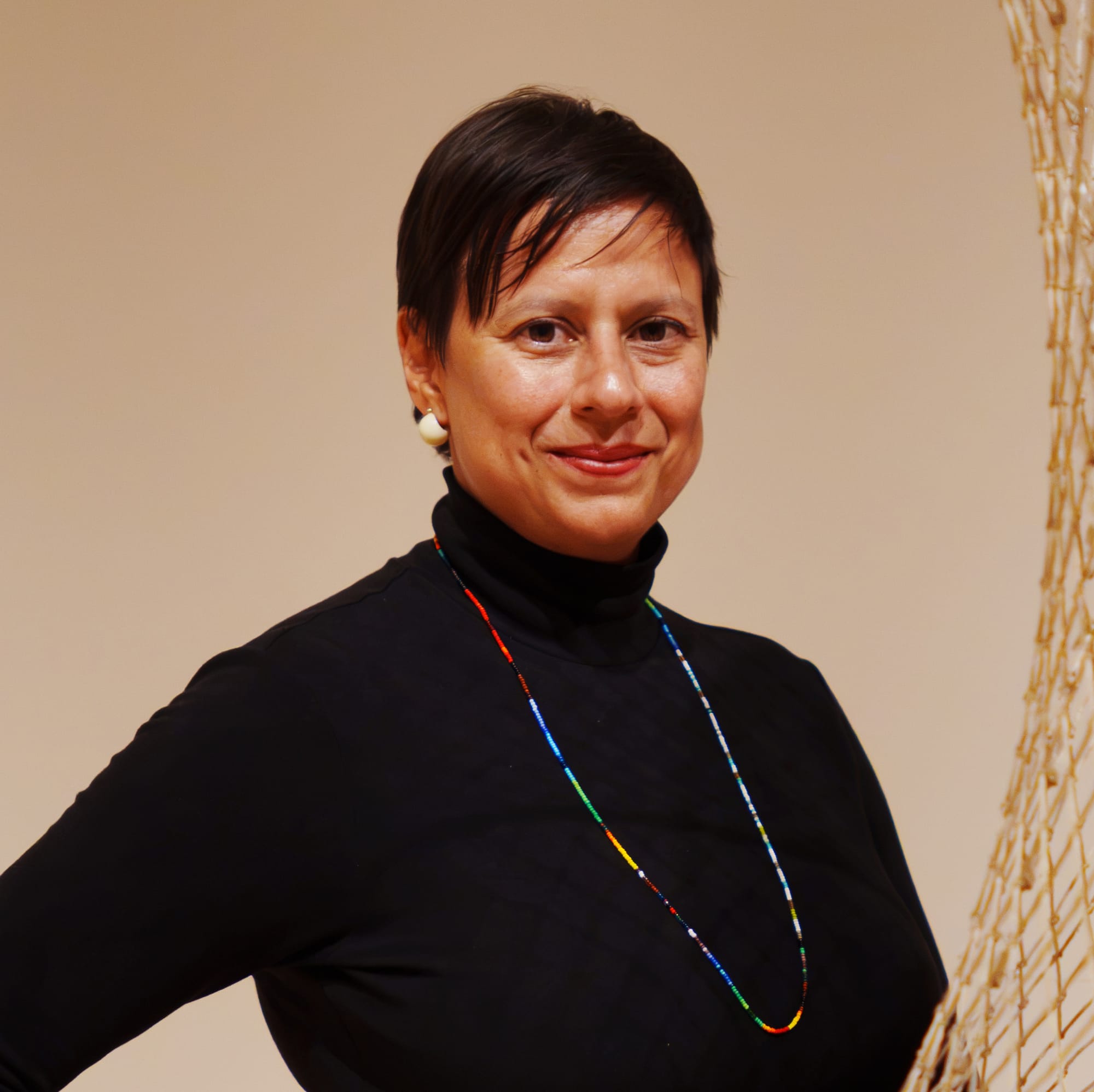
Carolina was born in London to Colombian parents and spent most of her childhood in Colombia. Early in her artistic career, she began to explore dams in Colombia and elsewhere. She worked with the concepts of flow and disruption, freedom and control, often linking the control of nature to the colonial control of indigenous people.
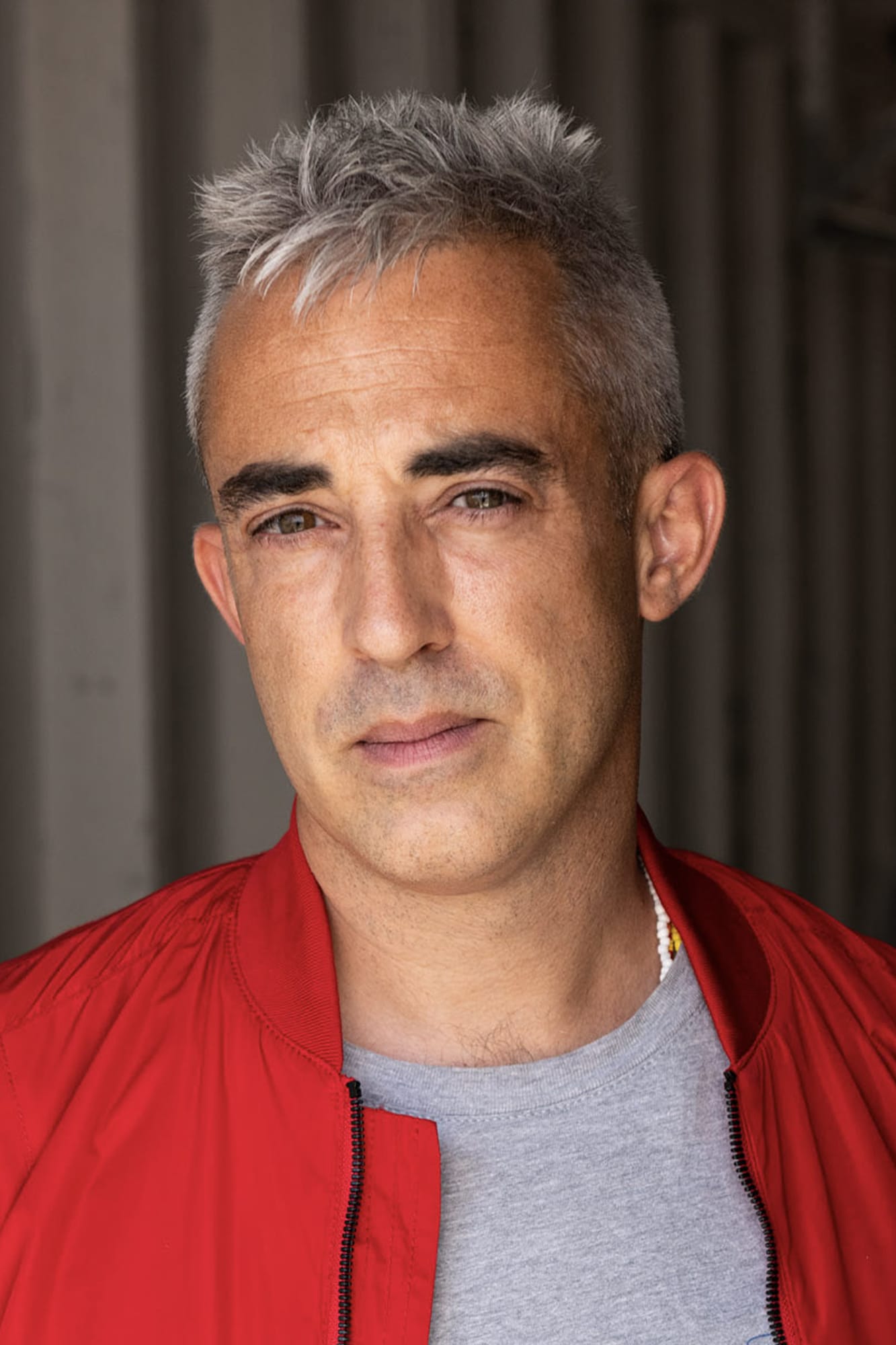
In Texas, Carolina and her partner, David, who is Spanish and primarily a filmmaker, found another version of this story. There are dams in Texas as well; and on land, the fences play a similar role of disruption and control.
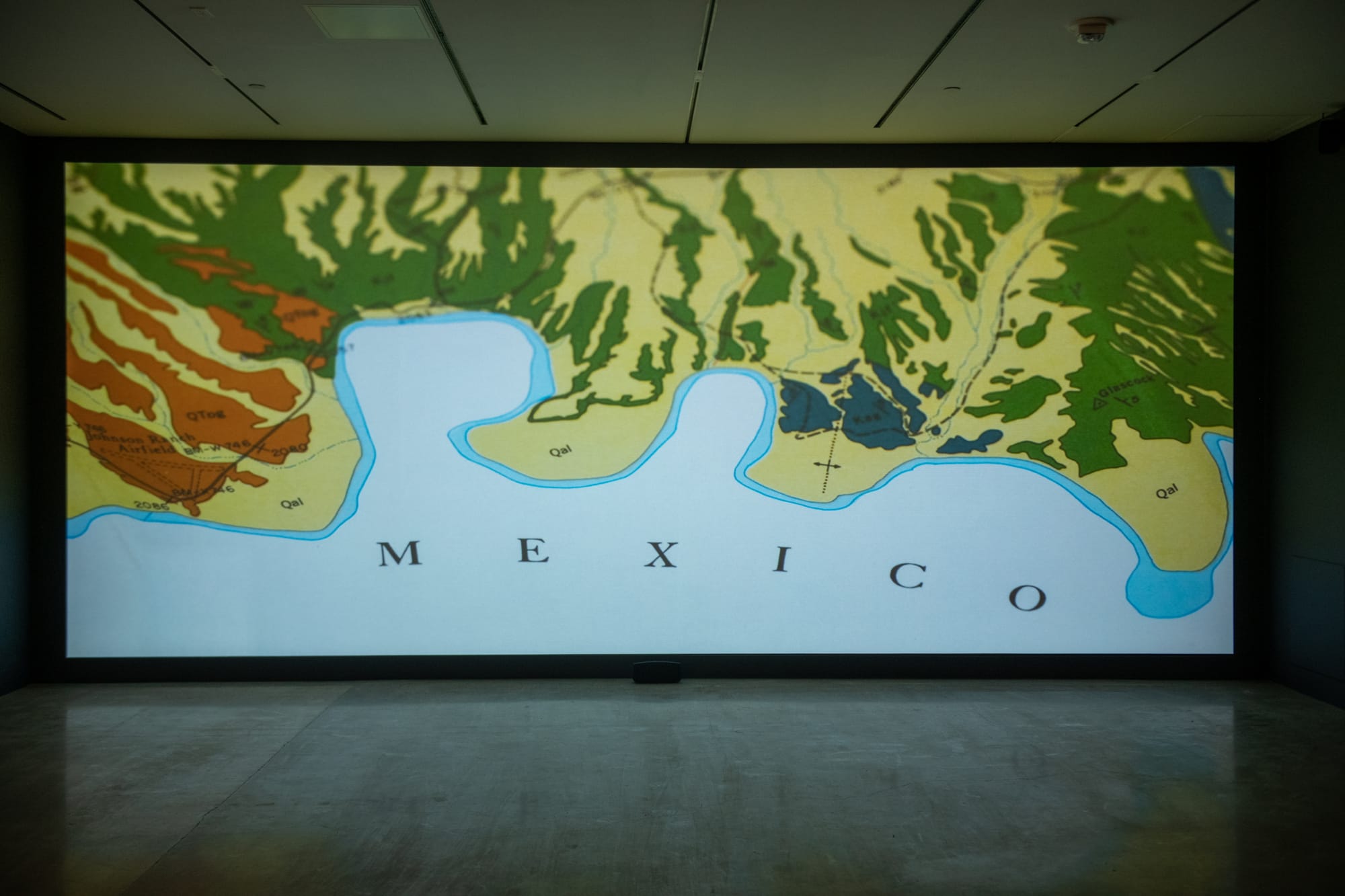
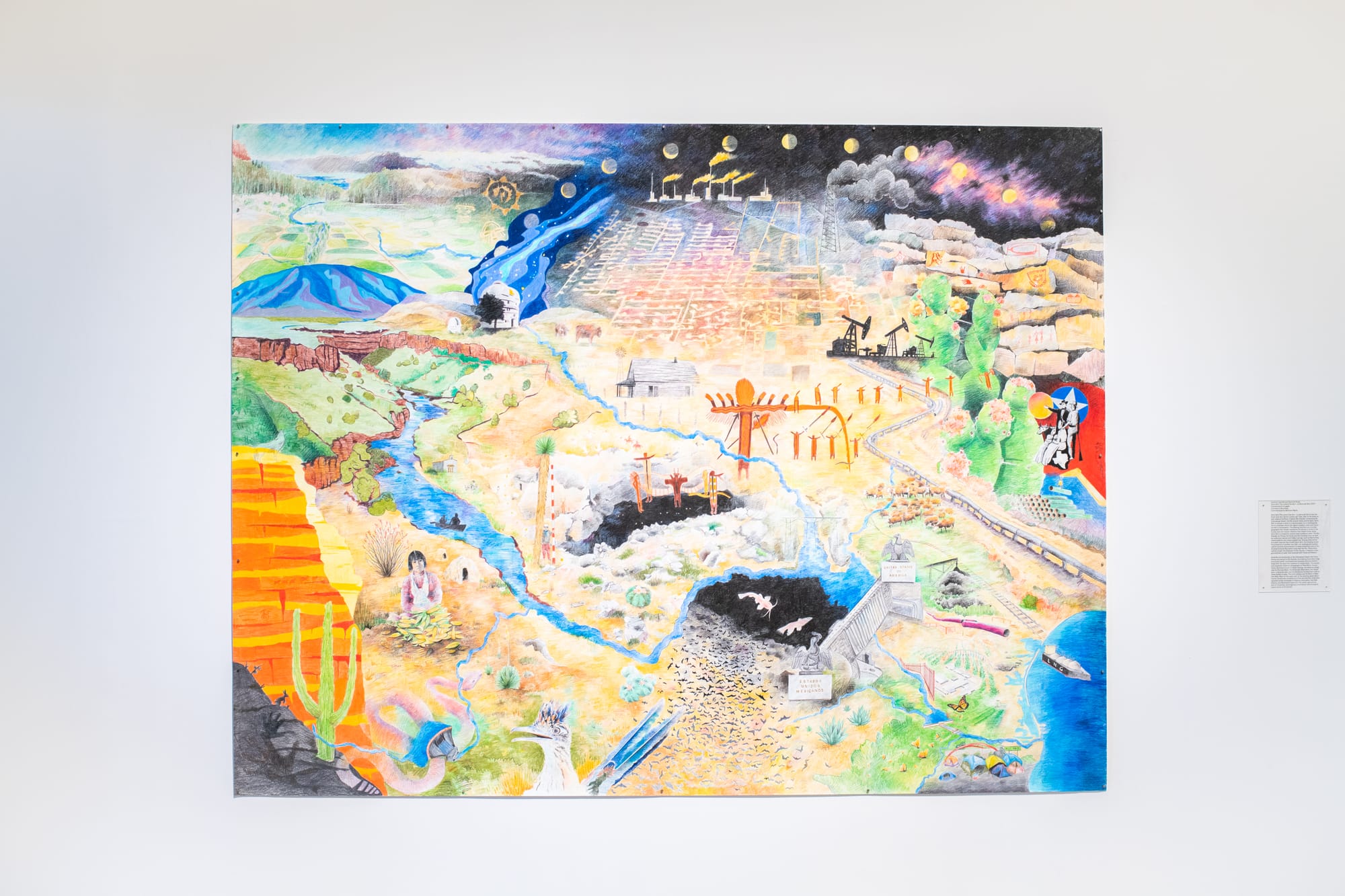
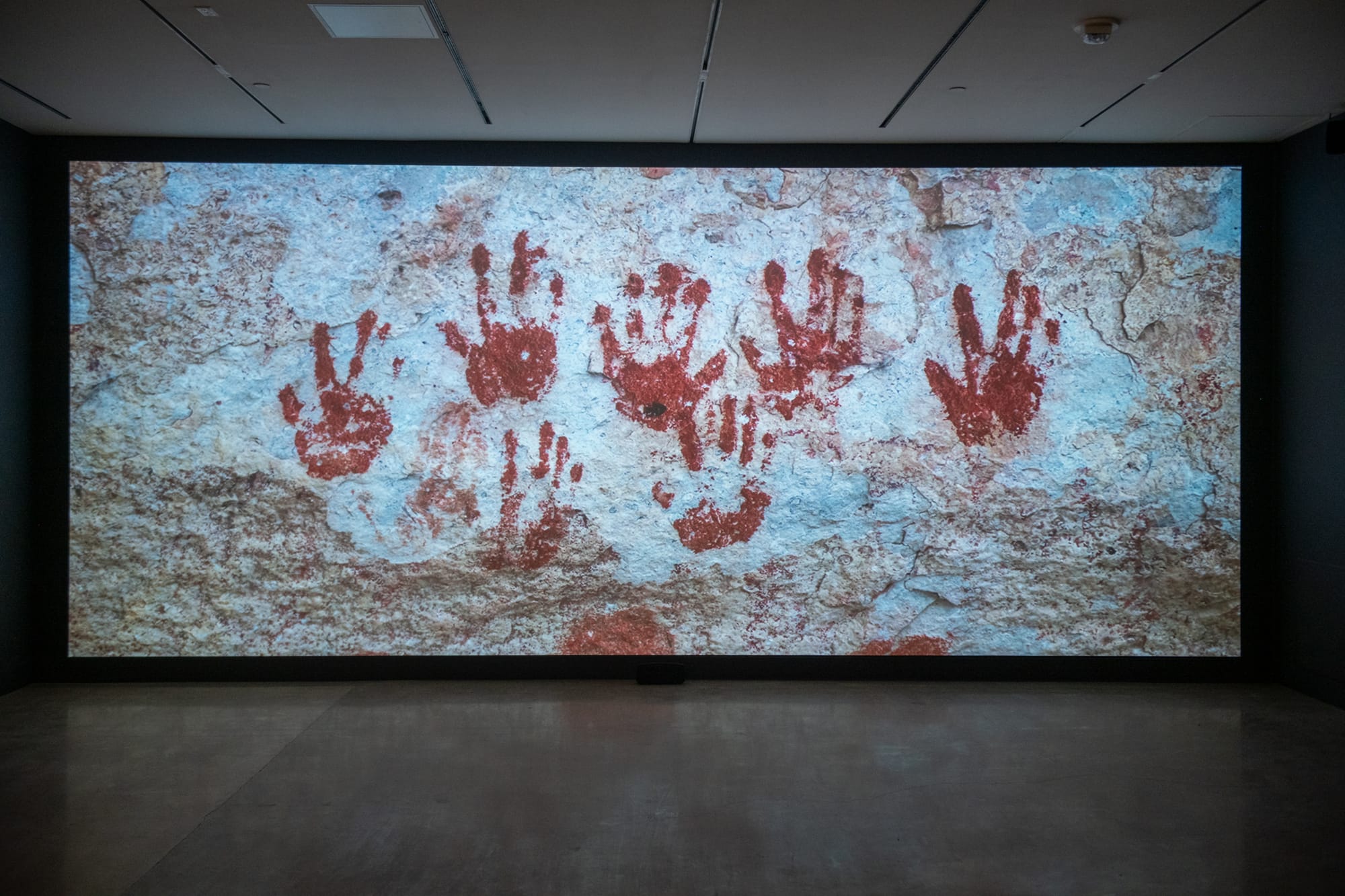
In 2020, Ballroom Marfa, a contemporary art museum in Texas, commissioned Carolina and David to make a multidisciplinary body of work called The Blessings of the Mystery. Through films, oral histories, paintings, sculptures, and other works, they explored dams, fences, extraction, and the history of colonial conflict with indigenous people. As part of their research, they worked closely with the tribal leader Juan Mancias, Chairman of the Carrizo/Comecrudo Tribe, who refers to the land of Texas and Northern Mexico as Somi Se'k, meaning “the Land of the Sun.”
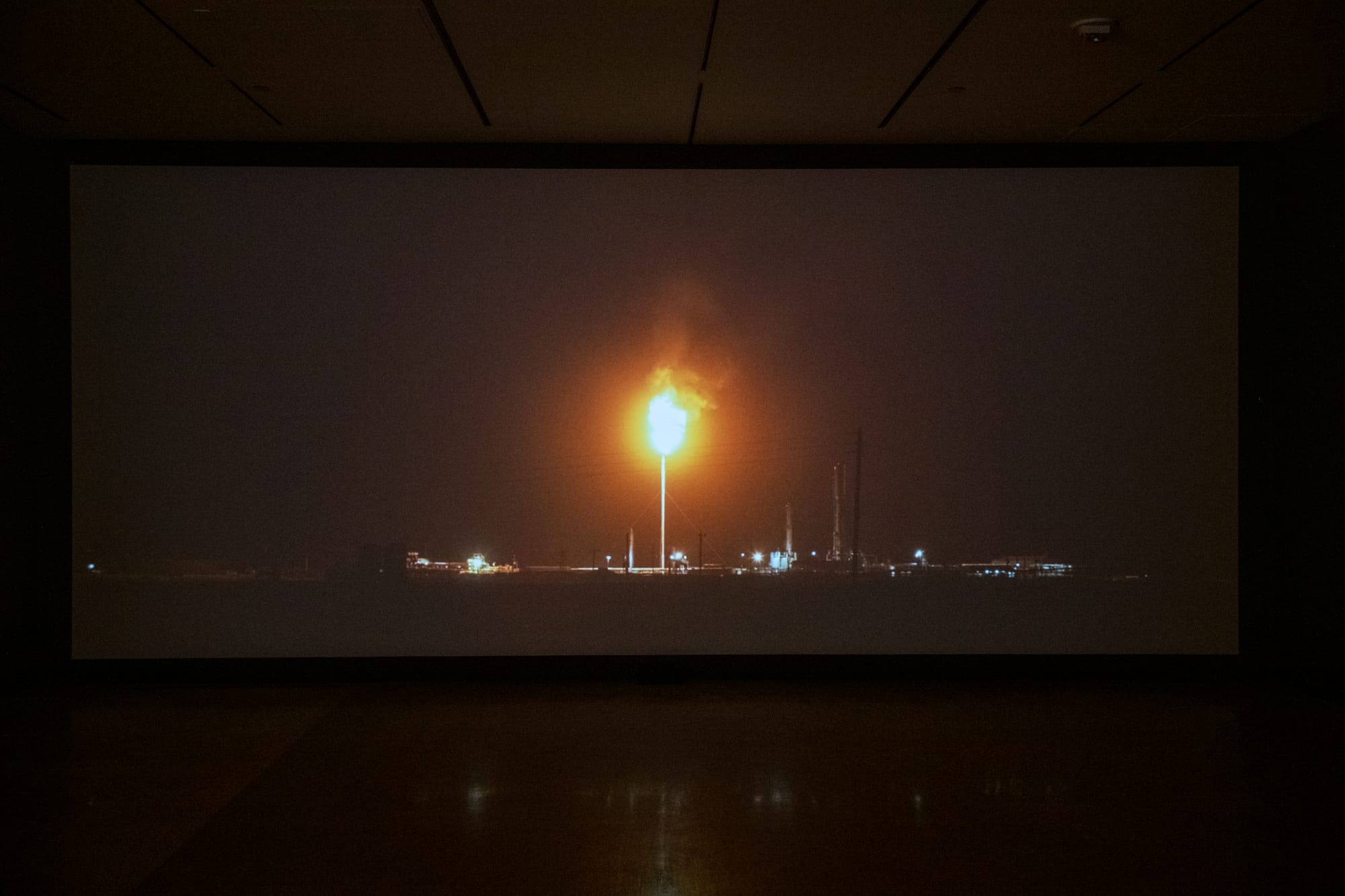
In the fall of 2021, still deep in the COVID-19 pandemic, the exhibition debuted at the Visual Arts Center at the University of Texas at Austin. As part of the program, I spoke with Carolina and David live on stage. I spent the first part of the conversation talking to Carolina about her previous work that led up to this project, and then I spoke to both Carolina and David about their collaboration on this new work in Texas.
In 2022, the exhibition had its homecoming at Ballroom Marfa in West Texas, before a portion of the work moved on to the Museum of Modern Art in New York City.
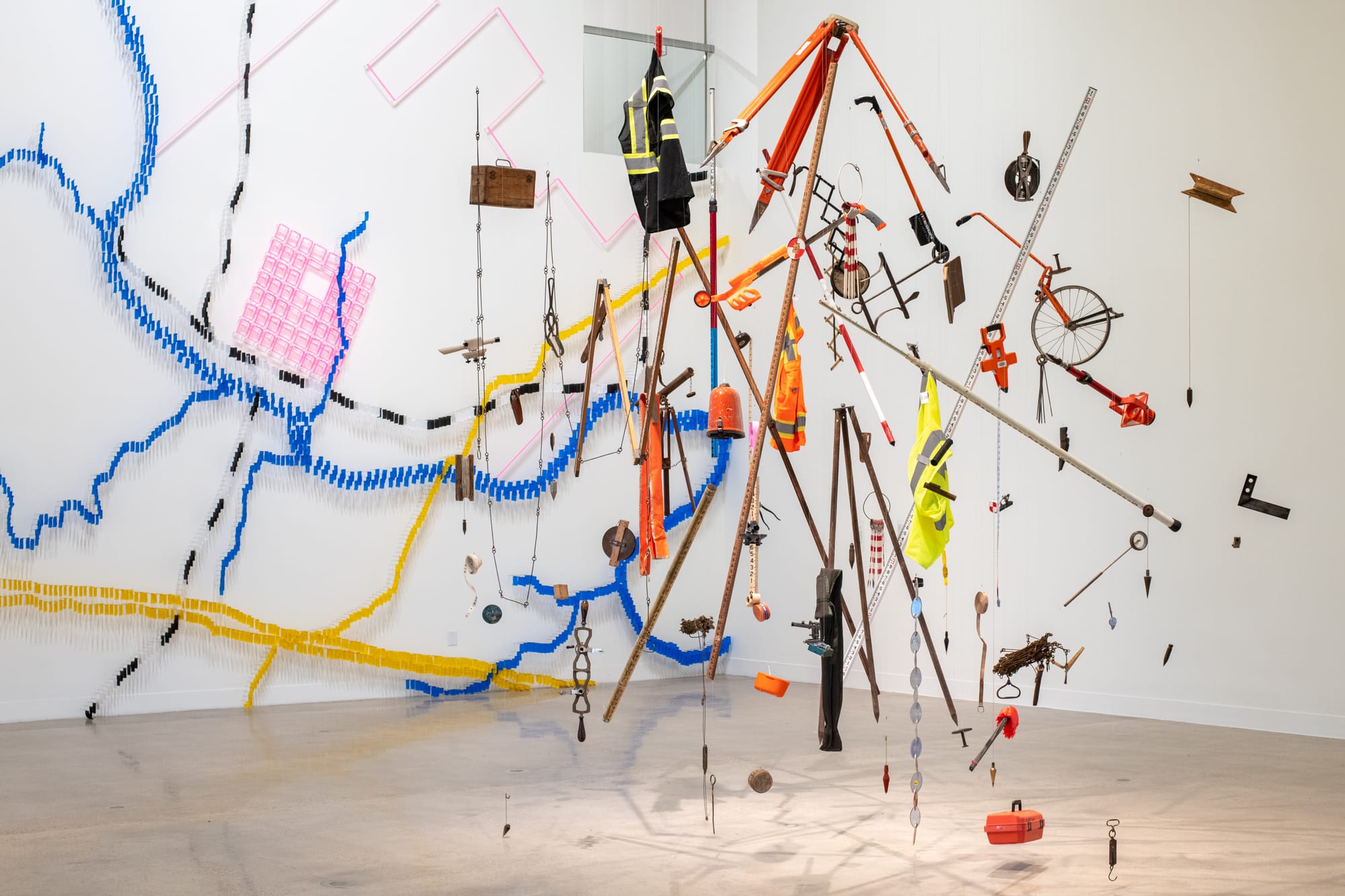
I’m John Fiege, and this is Chrysalis. You can subscribe at johnfiege.earth, where you will find show notes and all episodes of the podcast, plus my writing, photographs, and films. You can also see images of Carolina and David’s work on the website.
Here are Carolina Caycedo and David de Rozas.
Notes and Media Recommendations
- Carolina Caycedo — Official Website
- David de Rozas — Official Website
- Carolina Caycedo and David de Rozas: The Blessings of the Mystery — Visual Arts Center, The University of Texas at Austin
- The Blessings of the Mystery — Ballroom Marfa
- Projects: Carolina Caycedo and David de Rozas — The Museum of Modern Art (MoMA)
- Carrizo/Comecrudo Tribe of Texas (Somi Se'k) — Facebook Page
- The Land of the Sun and the River of Spirits (Penny Stamps Speaker Series with Carolina Caycedo, David de Rozas, and Juan Mancias) — PBS
- At UT’s Visual Arts Center, Two Shows Are Both Timely in Their Own Right — Sightlines Magazine
- Federal Land Ownership: Overview and Data — Congressional Research Servic
- The History of Land Grants in Texas — Texas State Historical Association
- Refusing to Forget: History of State-Sanctioned Violence by the Texas Rangers
Credits
This episode was edited by Domenica Klamm, Jamie Hager, Isabella Fleming, and Gabriela Córdoba Vivas. Music is by Daniel Rodríguez Vivas. Mixing is by Morgan Honaker.
The live recording was sponsored by the Visual Arts Center, the Humanities Institute, and the Department of Radio-Television-Film at the University of Texas at Austin. Special thanks to MacKenzie Stevens, Clare Donnelly, Noah Isenberg, Keefe Boerner, Elana Wakeman, and Pauline Strong.