31. Joan Naviyuk Kane — “Exceeding Beringia”
Listen to Chrysalis on Apple Podcasts, Spotify, YouTube, and Captivate.
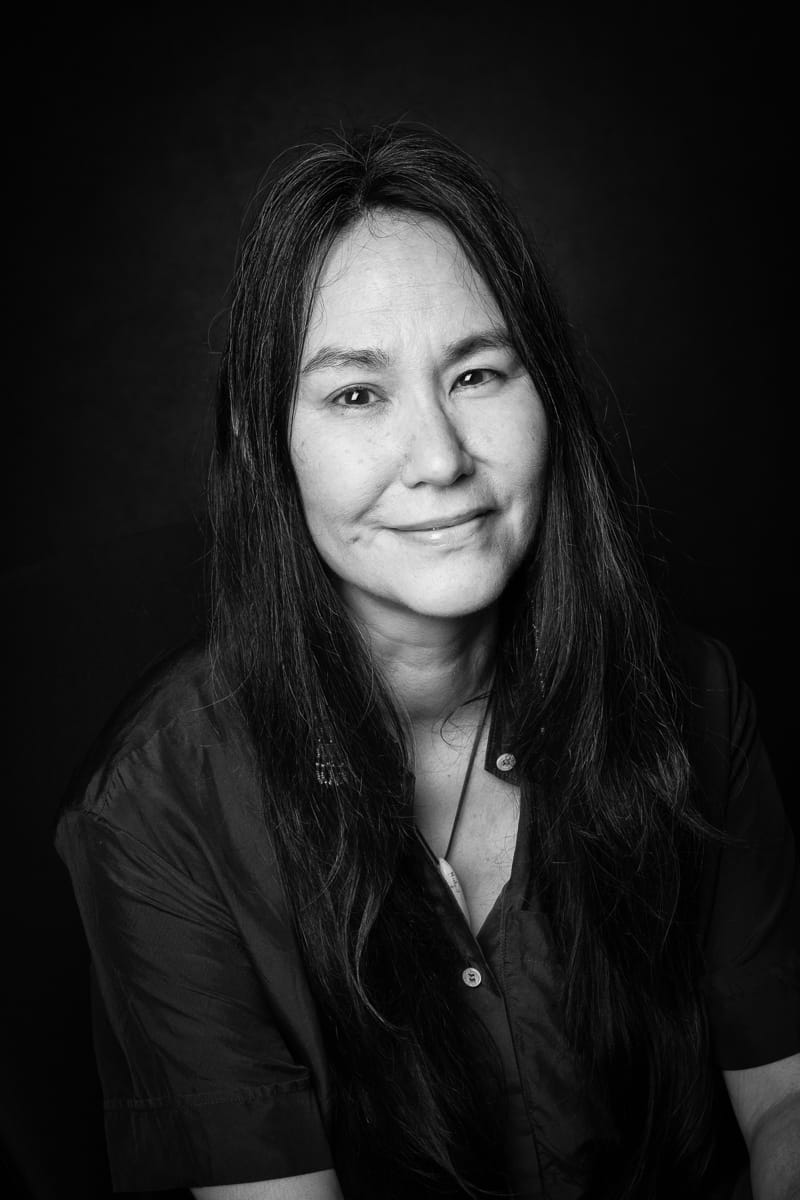
The poet Joan Naviyuk Kane ends her poem, “Exceeding Beringia,” with a call “to make our land our home anew.” I love this unusual phrasing, “our land our home,” connecting the two as one.
Joan is writing about a specific area of land. She is Iñupiaq, and her ancestral land includes Beringia, which is a region between Russia and Alaska. Her poem, “Exceeding Beringia,” explores the area’s troubled colonial history and it’s ecological devastation, but it also feels like the beginning of a new era of reclaiming the culture, the land, and the relationships that have been under attack for so long.
I’m John Fiege, and this is Chrysalis. You can subscribe at johnfiege.earth, where you will also find show notes and all episodes of the podcast, plus my writing, photographs, and films.
Joan Naviyuk Kane’s many books of poetry, including The Cormorant Hunter’s Wife, Hyperboreal, and Milk Black Carbon. She is the recipient of many prestigious awards and fellowships, including a Guggenheim Fellowship, Radcliffe Fellowship, Whiting Award, Paul Engle Prize, and Shelley Memorial Award. I spoke with Joan on July 14, 2022, when she was living in Cambridge, Massachusetts, and teaching at Harvard. She now lives in Portland, Oregon, where she is Chair and Associate Professor of Creative Writing at Reed College.
This episode of Chrysalis is part of the Chrysalis Poets series.
Here is Joan Naviyuk Kane reading her poem, “Exceeding Beringia.”
Exceeding Beringia
Joan Naviyuk Kane
“I remember the birds ever so many of them when I hunted with the weapons of a child. The water was covered in their numbers, red as the flowers of summer on the mountain. The red phalarope were our prey of choice, there were so many. Today, these birds return yearly, but now only a few return home in spring to show us they remain a part of the land, as we are.” —Herbert Aġiyġaq Anungazuk
Nimiqtuumaruq aktunaamik: bound with rope.
This land with its laws that serve as wire
and root to draw us together. Sinew, snare,
the unseen growth of the green tree
many rivers south whose stump now shoals
into use. Through layer upon layer of land
submerged, of ice, of ash, through lakes
that cannot be the eyes of the earth.
The phreatomagmatic blue sprawl
of the Devil Mountain Maar, the Kuzitrun
drained by inland veins scrawling tributaries
with name upon vanishing name.
The giant granite tors at Serpentine:
Iyat, the cooking pot sentineled
by unscoured stone as it towers
endlessly into the flickering sky.
Auksruaq, like the blood that seeps
across such hot and dim and strenuous
times where one still cannot be serene:
red phalarope, might we follow,
leaving the meadow wet with tears?
From nest to fledge and then to move again
right out to sea, circling tight vortices
to upwell food. Let us lose our grief
in great rafts as we translate the renamed
straits. Our limbs, like yours, are burnt
and broken. Let us at last make noise
of this truth as we return together
to wear another furrow, to make portage,
to make our land our home anew.
Notes and Media Recommendations
- Joan Naviyuk Kane's Website
- The Cormorant Hunter’s Wife By Joan Kane
- Hyperboreal By Joan Naviyuk Kane
- Milk Black Carbon By Joan Naviyuk Kane
- Dark Traffic By Joan Naviyuk Kane
- with snow pouring southward past the window By Joan Naviyuk Kane
- Sublingual By Joan Naviyuk Kane
- A Few Lines in the Manifest By Joan Naviyuk Kane
- Another Bright Departure By Joan Naviyuk Kane
- Ex Machina By Joan Naviyuk Kane
- The 2017 Griffin Poetry Prize Anthology: A Selection of the Shortlist By Sue Goyette, Joan Naviyuk Kane, George Szirtes
- Circumpolar Connections: Creative Indigenous Geographies of the Arctic By Liisa-Rávná Finbog, Joan Naviyuk Kane, Johannes Riquet
Credits
This episode was researched by Elena Cebulash and edited by Alice McClain, Sarah Westrich, and Kathryn Fair. Music is by Daniel Rodríguez Vivas. Mixing is by Morgan Honaker.