17. Transformation for a New Era
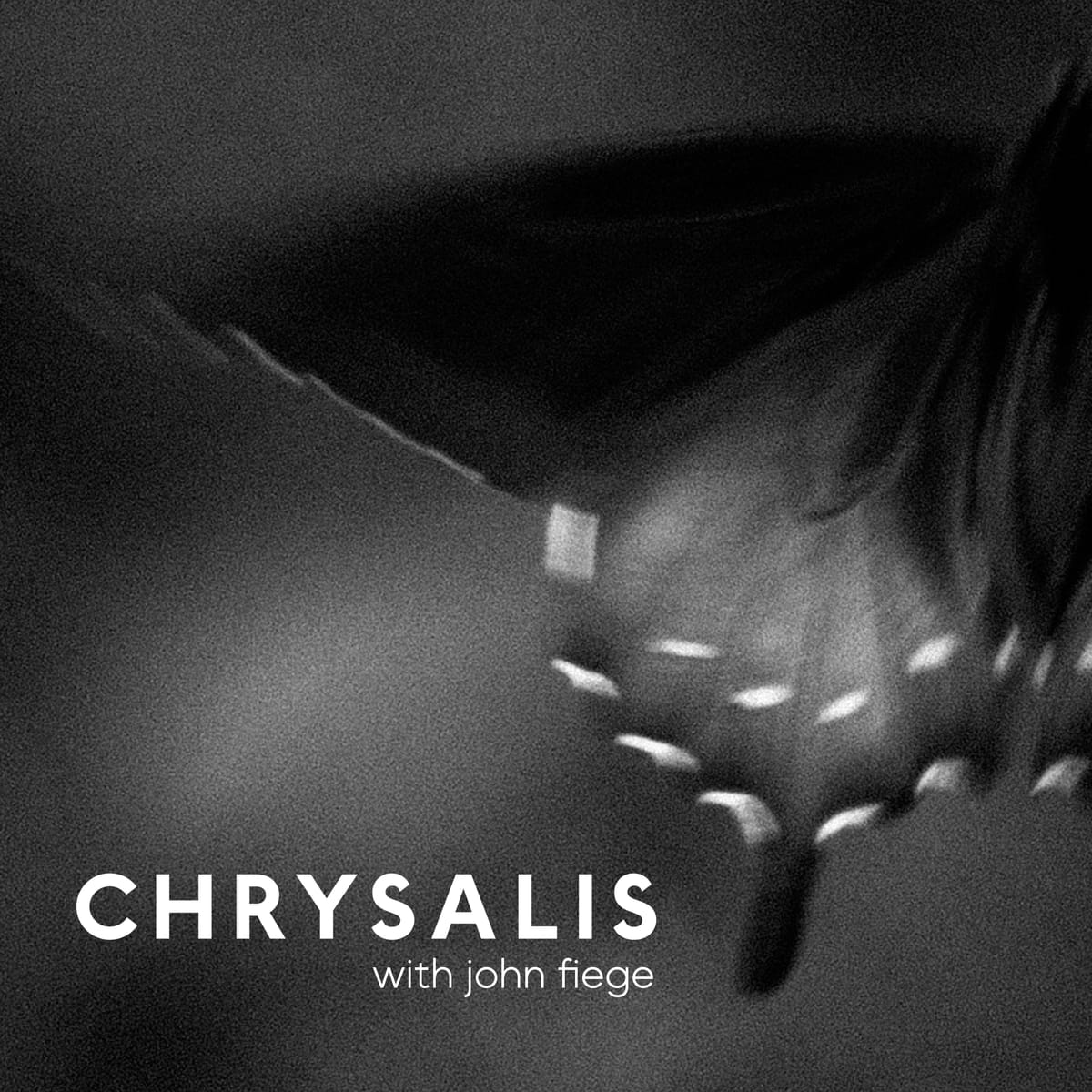
Today, I’m relaunching the Chrysalis newsletter and podcast with a new website, a new logo, and a new purpose. In the past year, here in the United States, we have witnessed one assault after another on environmental protections and ecological health, coupled with simultaneous assaults on democracy, civil rights, international cooperation, the rule of law, common decency—even truth itself. Through this difficult and painful year, as the news has been clogged with a dizzying and endless string of stories about the U.S. government’s assault on people and the natural world, I have reconceived and reworked Chrysalis to respond to our current moment.
I launched the Chrysalis podcast in the wake of the COVID-19 pandemic. It was an experiment. I’m primarily a documentary filmmaker, making films about environmental issues and our relationship to the natural world, but I wanted to tell more stories, be in conversation with more people, more frequently, and reach a wider audience.
The last podcast episode I released was eight days before the American people elected Donald Trump to be president of the United States for a second time. After his election, we found ourselves in a new historical era.
American administrations of every political stripe have failed to prioritize or effectively confront the cascading crises of climate change, habitat destruction, mass extinction, and environmental injustice. Nonetheless, Donald Trump’s victory in the 2024 Presidential election was the realization of a worst-case scenario for the environment and those who care about protecting it.
After the 2024 election, I asked myself what I could do with the podcast, and my work more generally, knowing that there was about to be a full frontal assault on wolves and birds, forests and wetlands, clean air and clean water, environmental regulations, environmental justice, the clean energy transition, efforts to reduce plastics and other waste, and who knows what else from this new regime that was willing to break laws and ethical norms to enrich themselves and their political donors at any cost to the country or the planet.
I didn’t have an answer. I didn’t know what to do.
Before the election, in August of 2024, I found out that I was awarded the largest and most competitive grant of my career. The National Endowment for the Humanities was going to give me a development grant for my new film about consumption and waste in New York City. I was planning to focus on development of the project for the next year in order to apply for the even larger production grant the following year.
When Trump was elected, I knew there would be no second grant. Even though past Republican administrations were hostile to the arts and humanities, the arts and humanities endowments survived their administrations and funded projects that didn’t align necessarily with Republican priorities. Trump 2.0 felt like it was going to be different. I decided I needed to figure out how to use my development grant to make the entire film very quickly.
I put the podcast on pause to focus on making this film while I could. Then, in April of 2025, Trump cancelled my development grant, along with almost all other National Endowment for the Humanities grants. The letter I received, notifying me that the grant had been cancelled a week earlier, stated “NEH has reasonable cause to terminate your grant in light of the fact that the NEH is repurposing its funding allocations in a new direction in furtherance of the President’s agenda...The termination of your grant represents an urgent priority for the administration, and due to exceptional circumstances, adherence to the traditional notification process is not possible.” Exceptional circumstances indeed.
I am very lucky to be a professor at the University at Buffalo, and this New York State university stepped in over the following several months to find replacement funding for much of what I lost to Trump’s assault on the federal government. This film project is now underway, despite the set-backs, and I’m ready to get the podcast back up and running.
Here’s my plan: first, I’m bringing all of my work—writing, podcasting, photographs, and films—under a single new digital roof at johnfiege.earth. I’ve moved the website to a non-profit, distributed, open source publishing platform, called Ghost, which has no owners or investors.
Second, I will be adding my own essays to the newsletter, examining current environmental topics, and releasing those written pieces as audio essays on the podcast, as I continue to release long-form conversations with environmental thinkers.
Third, we have a new logo, designed by the talented Alexa Rusin, using one of my butterfly photographs. The new logo is a completely new look that helps tie my photographic work to the newsletter and podcast, but it still represents the theme of transformation at the heart of the Chrysalis project and the beauty of the world that I want to protect and nourish.
And lastly, I am introducing a paid subscription option for the newsletter and podcast. Since the podcast’s inception, a hardworking team of students and interns has helped make the show possible, but my very limited financial resources have prevented me from growing, working more quickly, and releasing episodes more frequently. I want the newsletter and podcast to always be freely available to anyone, without advertising. However, the Chrysalis project needs more funding to grow and become self-sustaining, and a paid subscription option is a key element of this effort.
Paying members will have access to the same newsletters and podcasts as the free option, but they will also have access to the community comments section of the newsletter and to streaming of my documentary films, both shorts and feature-length films. I want to make sure that money never limits anyone’s access to Chrysalis, but I also want to give audience members the ability to support the project, help it grow, and subsidize free access for everyone else.
Tomorrow morning, I will be releasing the first new episode: my conversation with the legendary environmental justice pioneer, Lois Gibbs, who was a young mother in the 1970s when her children became sick in her new neighborhood of Love Canal, in Niagara Falls, New York, right next door to where I now live in Buffalo. Lois refused to sit down and be quiet, as leaders in government, industry, and academia dismissed and derided her as a hysterical housewife. Her story has been widely known for decades, but she’s a real rock star, and her stories are unbelievably powerful when you hear them from her. Her vibrant spirit is a massive inspiration to me in these dark times. I interviewed Lois live in front of an audience, and we were able to film the event, so we’ll also be releasing the video version of the episode on our new Chrysalis YouTube channel.
Lois will be kicking off what I call our Toxic Spring here at Chrysalis. The next week, we will release my conversation with Jim Morris, who wrote a brilliantly reported and devastating account of the largest cancer cluster ever to be identified at a single work place. That work place was the Goodyear chemical plant, also in Niagara Falls. In fact, Lois Gibbs’s husband in the 1970s worked at the Goodyear plant while she was at home fighting to expose the truth about toxic chemicals under their feet.
The Toxic Spring and the connections to Love Canal will continue with a live recording of the podcast on March 11 with Mike Schade, who works on campaigns to reduce toxic chemicals with a group called Toxic-Free Future. Mike started here in Buffalo and used to work with Lois Gibbs.
The following month, on April 16, I’ll be doing another live podcast recording with two other people related to Love Canal. The first is Luella Kenny, who was another mother at Love Canal in the 1970s, alongside Lois Gibbs, but Luella was also a cancer researcher. I’ll be in conversation with her, along with Keith O’Brien, who wrote a book that features Luella and Lois’s stories, called Paradise Falls: The True Story of an Environmental Catastrophe.
Both of these live shows will be released later as podcasts. If you’re in Buffalo, check out our website for more event details.
Regardless of where you live, the best way you can help us grow and get the word out is to subscribe to the newsletter at johnfiege.earth and then tell your friends about the newsletter and podcast.
I would also love to hear from you—your reactions to the show, what you’re interested in reading on the newsletter or hearing on the podcast, or anything else you’d like to share. You can contact me anytime at johnfiege.earth.
It’s a been a rough year for many of us, but I’m looking forward to exploring the new possibilities we have in this pivotal moment in history to transform ourselves and our relationship to the natural world. Please join me.
It’s going to be a fun ride.
Notes and Media Recommendations
In His First 100 Days, Trump Launched an ‘All-Out Assault’ on the Environment
TRUMP’S ASSAULT ON THE ENVIRONMENT HAS BEEN EVEN WORSE THAN EXPERTS PREDICTED
Trump’s Assault on the State of Our Health and the Environment
https://www.nrdc.org/media/trumps-assault-state-our-health-and-environment
Cultural groups across U.S. told that federal humanities grants are terminated
https://www.npr.org/2025/04/03/nx-s1-5350994/neh-grants-cut-humanities-doge-trump
Credits
This episode was edited by Isabella Fleming. Music is by Daniel Rodríguez Vivas. Mixing is by Morgan Honaker.